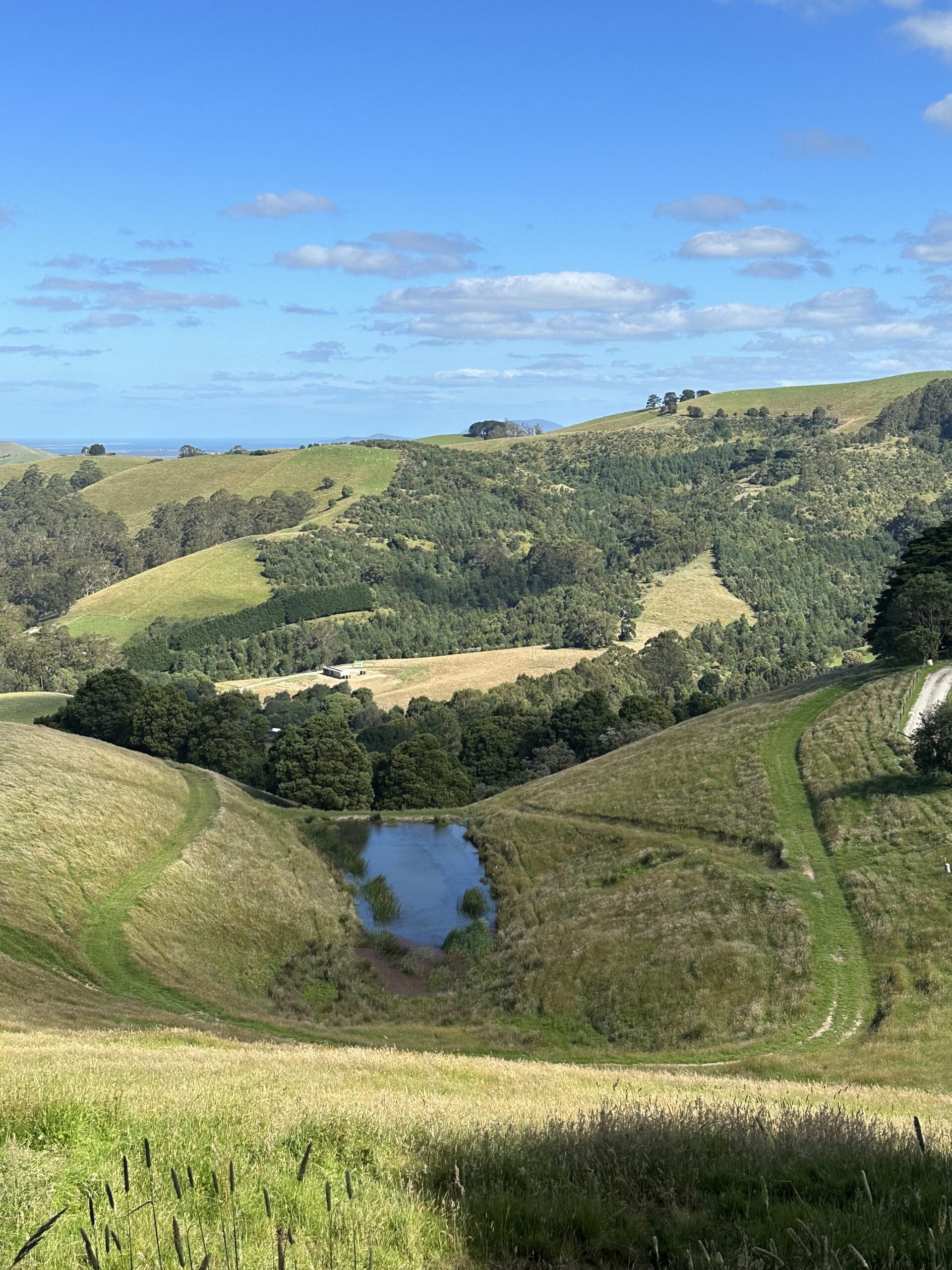
The South Gippsland Biodiversity Protection Plan (BPP) has been developed to guide collaborative and coordinated actions in our region, with the aim of improving native biodiversity over the next decade and beyond.
The BPP was launched at the South Gippsland Landcare Network (SGLN) AGM in October 2024 by Network Chair Jillian Staton. It was developed by SGLN in conjunction with a key stakeholder group comprising organisations and agencies that manage natural areas and protect biodiversity across South Gippsland, as well as Landcare members and local farmers. Input was also provided by community stakeholders and environmental experts.
Download the full plan
The complete South Gippsland Biodiversity Protection Plan (October 2024), including the natural values of each landscape zone, the threats they face and all nine tables of objectives, actions and measures.
Purpose of the plan
To guide the development and implementation of collaborative and coordinated action including on-ground works, research, monitoring, education and engagement to achieve measurable improvements in native biodiversity in South Gippsland over the next 10+ years.
Vision
That South Gippsland’s native biodiversity is valued, protected, and enhanced through collaborative and coordinated action across government, industry and community.
Nine Strategic Directions
Nine Strategic Directions were formulated to guide the development of the objectives, actions and measures that make up the South Gippsland BPP. The objectives and actions were informed by the values, threats and opportunities for action in the region. Select a Strategic Direction to see its full table of objectives, actions and 10-year measures.
- 1Protect our remaining native biodiversityObjectives, actions & measures →
- 2Enhance the quality, quantity, resilience and function of native ecosystemsObjectives, actions & measures →
- 3Improve the connectivity of native biodiversity across the landscapeObjectives, actions & measures →
- 4Educate and engage to encourage care of and investment in native biodiversityObjectives, actions & measures →
- 5Take informed, targeted action for priority threatened speciesObjectives, actions & measures →
- 6Work with and alongside Traditional OwnersObjectives, actions & measures →
- 7Strengthen climate resilience in our landscapeObjectives, actions & measures →
- 8Collaborate and coordinate to deliver effective biodiversity outcomesObjectives, actions & measures →
- 9Continue to build and share knowledge to inform better biodiversity outcomesObjectives, actions & measures →
The proposed measures of success reflect the aspirations of the key stakeholders and community and range from very specific to quite general. Some measures recognise that simply taking action is an important first step in achieving an outcome while others are difficult to quantify at this period in time. For these reasons, the South Gippsland BPP gives the South Gippsland BPP Implementation Committee flexibility to clarify further methods of evaluation. There are also opportunities for the objectives and measures of success to be reviewed at Years 3, 6 and 9.
How the plan was developed
There is no provision in state or federal legislation, plans or strategies for a coordinated approach to conserving biodiversity in South Gippsland.
In 2020, SGLN initiated the development of a Biodiversity Protection Plan to meet this need. SGLN sought the support and involvement of key regional stakeholders to both develop the Biodiversity Protection Plan and form a working group to implement the plan going forward.
The South Gippsland BPP has been developed in three stages:
- Completion of the South Gippsland BPP Foundation Document. This was a dedicated research project that collated significant amounts of information on the region’s ecosystems, species and natural processes. It resulted in a document that can be used as a resource on the natural values of the region, particularly providing summarised information for values on public land. Development of the Foundation Document involved a collaborative working relationship with a Scientific Advisory Committee and was overseen by a subcommittee of the SGLN.
- Review and Scoping Phase. The review and scoping phase considered relevant regional strategies, plans and data from stakeholders to provide context and strategic relevance for the plan. This resulted in a summary of values and threats, information on regional stakeholders and relevant policy, strategies and plans and a set of Strategic Directions.
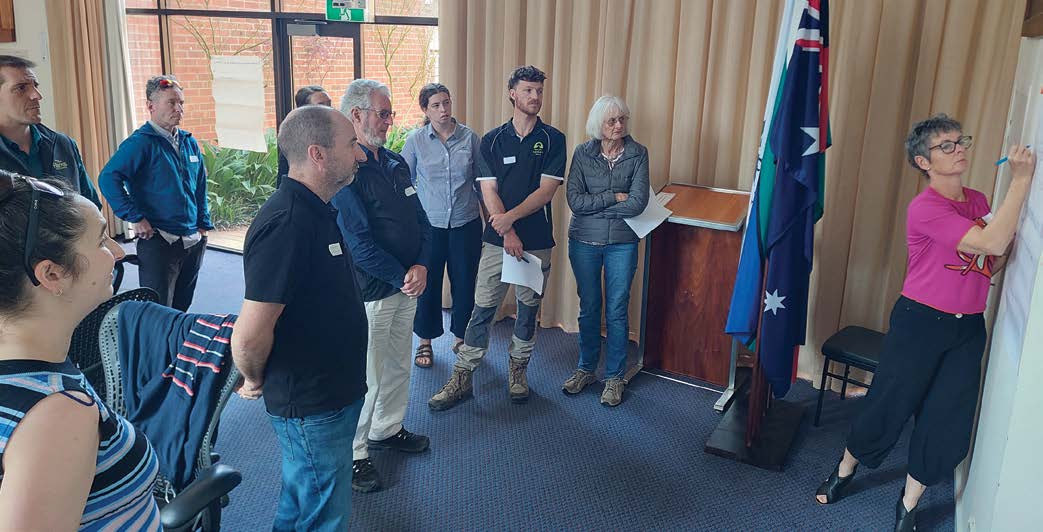
- Drafting and Engagement. This stage was guided by a Stakeholder Engagement Plan and included three key stakeholder workshops and a survey to determine Landcare members’ activities and interest in future action on nature conservation. Regular updates and news items were shared via SGLN newsletters and social media. Key stakeholders provided feedback on an early draft and the final draft was presented for broad community consultation in May 2024. A community workshop was held in June 2024. The community was able to provide feedback at the workshop and online. All feedback was considered when drafting this plan.
Developed with
The BPP has been developed with the following groups and organisations:
- Department of Energy, Environment and Climate Action
- Department of Transport and Planning
- Gippsland Threatened Species Action Group
- Greenfleet
- Greening Australia
- Melbourne Water
- Parks Victoria
- Prom Coast Ecolink
- South Gippsland Landcare Network groups and their members
- South Gippsland Shire Council
- Trust for Nature
- West Gippsland Catchment Management Authority
SGLN is grateful for the support of the Helen Macpherson Smith Trust which funded the first stage of the development of this Biodiversity Protection Plan.
Thank you to the organisations and individuals who provided valuable feedback on our public consultation draft.
Putting the plan into action
The success of the South Gippsland BPP will depend on a coordinated approach between all key regional stakeholders involved in biodiversity and land management in South Gippsland. It will require significantly more funding for on-ground work than is currently dedicated to biodiversity conservation and more staff and on-ground resources for implementation.
SGLN leads the South Gippsland BPP Implementation Committee, which comprises organisations that either manage or have direct influence over areas of native biodiversity values in South Gippsland. Priority actions, resources, stakeholder roles and training requirements are determined annually via an Annual Implementation Plan, with a more detailed review of progress planned at the end of Years 3, 6 and 9.
Progress updates, including each year’s summary of actions, are published in News & Updates.